Bunk Rooms: A +33-50% Nightly Rate, or a Booking Trap?
Converting a bedroom to a bunk room can raise nightly rates 33-50%, but it can also shrink your addressable guest pool. Here is when it pays and when it backfires.
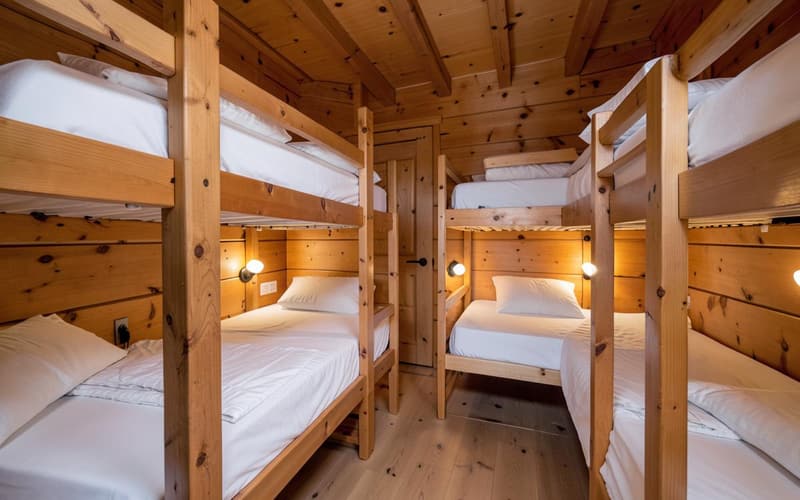
The promised upside
Bunk rooms are one of the most-talked-about revenue moves in the short-term rental playbook. The pitch sounds compelling: convert a queen bedroom that sleeps 2 into a bunk room that sleeps 4-6, expand your max occupancy, and command a meaningfully higher nightly rate.
The numbers, when it works, are real. The often-cited example is a Lake Tahoe 2BR sleeping 4 at $155/night versus the same cabin reconfigured to sleep 6 at $285/night. That is a roughly 84% rate jump for the cost of one commercial-grade bunk bed.
More conservatively, AirDNA and operator data put the lift at 33-50% when a bunk room is appropriately placed in a family or group-skewing market. Demand for 6+BR homes grew 12.61% year-over-year in AirDNA's 2024 data, with 5BR up 10.65% and 3BR up 7.48%. Large-group inventory is where booking growth is concentrated.
When it works
Bunk rooms reliably pay off in three conditions, all of which need to be true:
1. The market skews family or large-group. Pigeon Forge and Sevierville (Smokies family vacationers), Branson, the Wisconsin Dells, Orlando, and similar destinations qualify. Adult-couple-heavy markets (downtown Nashville, Charleston King Street, urban condos) do not. 2. Your max occupancy is currently the binding constraint on bookings. If your cabin is consistently full when 6+ guests are searching and empty when 2-4 are searching, expanding capacity expands your addressable market. 3. The room is the right size and layout. Bunks need 9'+ ceilings for the top bunk to be comfortable for adults, adequate egress for fire code, and ideally a private bathroom.
In a typical Smokies cabin converting a queen bedroom into a twin-over-full bunk (sleeping 3-4 instead of 2), the install cost is $1,500-$3,500 for a commercial-rated bunk and the rate lift typically holds at 25-40%. Payback is usually 3-5 months.
When it backfires
This is the part most furnishing companies skip. A bunk room can actively shrink your bookings in the wrong market.
A Lake of the Ozarks operator quoted in industry coverage estimated that roughly 50% of their guest pool was adult couples or small adult groups who explicitly reject bunk beds. A bunk room in an adult-skewing market signals "kid trip" and removes your cabin from consideration by half your potential bookers.
The other failure mode is capacity that exceeds what the cabin can support. Selling a 2BR cabin as "sleeps 8" with one bathroom produces predictable 3-star reviews about line-for-the-shower, no parking, and noise. Industry rule of thumb: roughly one bathroom per 3-4 guests, and parking for at least one car per 2 guests. Violate either and the rate lift is wiped out by review damage within months.
The bunk hardware matters
If you do install bunks, two specifications are non-negotiable for STR use:
- Commercial weight rating of 400+ lbs per bunk. Adult guests will sleep on the top bunk. Residential bunks rated 200-250 lbs are a liability problem waiting to happen. - Steel frame, not wood. Wood bunks in an STR fail within 2-3 years from the cumulative stress of guests climbing in and out. Steel commercial frames last 7-10+ years.
Twin-over-full is the highest-utility configuration in most cabins: one twin top, one full bottom, sleeps 3 comfortably, and adults are happy on the full. Twin-over-twin sleeps 2 but kids and adult-couple guests will use it. Avoid stacking three bunks unless your ceiling is 10'+ and you have separate egress.
The decision framework
Add a bunk room if all four are true:
1. Your market is family or group-skewing. 2. Your cabin has a room that can structurally and code-legally support bunks. 3. Your bathroom-to-guest and parking-to-guest ratios still hold at the new max occupancy. 4. Your comps at the new occupancy tier are renting at materially higher rates.
Skip it if any are false. The rate lift is real when conditions are met. The booking damage is real when they are not.
The bottom line
Bunk rooms are a high-upside, high-fit-risk move. In the Smoky Mountains family-vacation market, they usually work and usually pay back in under 6 months. In adult-couple-skewing markets, they can cost you bookings. The honest answer is "it depends on your cabin and your comps," and any furnishing partner who tells you otherwise is selling you a bunk bed they want to install, not a strategy.
We will look at your specific cabin, your sub-market's guest mix, and your existing capacity before we recommend (or refuse to recommend) a bunk room conversion.
Next step
Get your cabin's ROI estimate
A quick 5-step calculator showing the revenue lift from a furniture refresh.